Posts by Joan Price
Miriam Kura’s Advice for Shy-When-Naked Women

Miriam Kura wrote me about her experience posing nude for photographs at age 60. Her experience was so empowering and delightfully sexy that I encouraged her to share it with you, along with the steps she followed to become comfortable enough to embrace this racy adventure.
I invite you to post your comments. Enjoy!
For my 60th birthday, I asked my sex friend if he would take nude photos of me — this was the youngest I was ever going to be again! We set a date to do it two weeks out.
During that time I looked on the Internet under “nude photos” and got ideas about props and poses, picking out what I thought fit my style – natural and elegant. I collected scarves, pearls, a white boa, a leather jacket, a man’s crisp white shirt, translucent white curtains, gold lace fabric.
 When the day came, we had three hours of creative and collaborative fun. He took over 700 pictures! It was like adult arts and crafts. I felt beautiful, sensual, comfortable, sexy, at ease, and appreciated.
It was a gift I gave myself, and he gave to me. And we both enjoyed it immensely. I never could have pulled it off if I hadn’t prepared the year before to fully occupy my nude sexiness in these nine easy steps:
1. Believe your lover when he says that he loves the way your neck/ breasts/ waist/ legs/ butt/ hair/ face/ feet/ whatever looks.
2. Just do it. Look at yourself naked everyday, while you’re doing something else, like brushing your teeth. Get used to it. Blow-dry your hair while naked. Put on your makeup while naked. Make it part of your routine.
3. Go naked until it’s so normal that you don’t cringe any more.
4. Do it until you get curious about how you look at different angles.
5. Look at yourself in the mirror naked and try to see what he sees.
6. Do it until you sincerely enjoy looking at some part of yourself, with pleasure.
7. Walk naked around the house as you do some little chore, like put the wet towel from your shower into the dryer, or when you go to put some music on, or lay out your clothes. Work up to spending more time naked around the house.
8. Take time taking your clothes off when your lover sees you do it. Practice doing it in an unhurried manner. Then practice as though you enjoy him looking at you. Then start to actually enjoy it. Then flaunt it a little while he looks. Then give him a sly, proud, slow smile while you do it.
9. Ask him to take your clothes off – slowly.
This experience showed me that every body looks good from some angle. You just have to find it. Some pictures were totally not complimentary. But overall we found the angles that worked. It was surprisingly fun to see myself as the art subject.
==========
 Miriam Kura, 61, is a business owner who lives in Portland, Oregon. She contributed to the anthology, Ageless Erotica, edited by Joan Price. She is delighted to learn that sex in late mid-life is a whole lot more fun and meaningful than it was in earlier decades.
Badly Behaved for Women’s History Month 2014
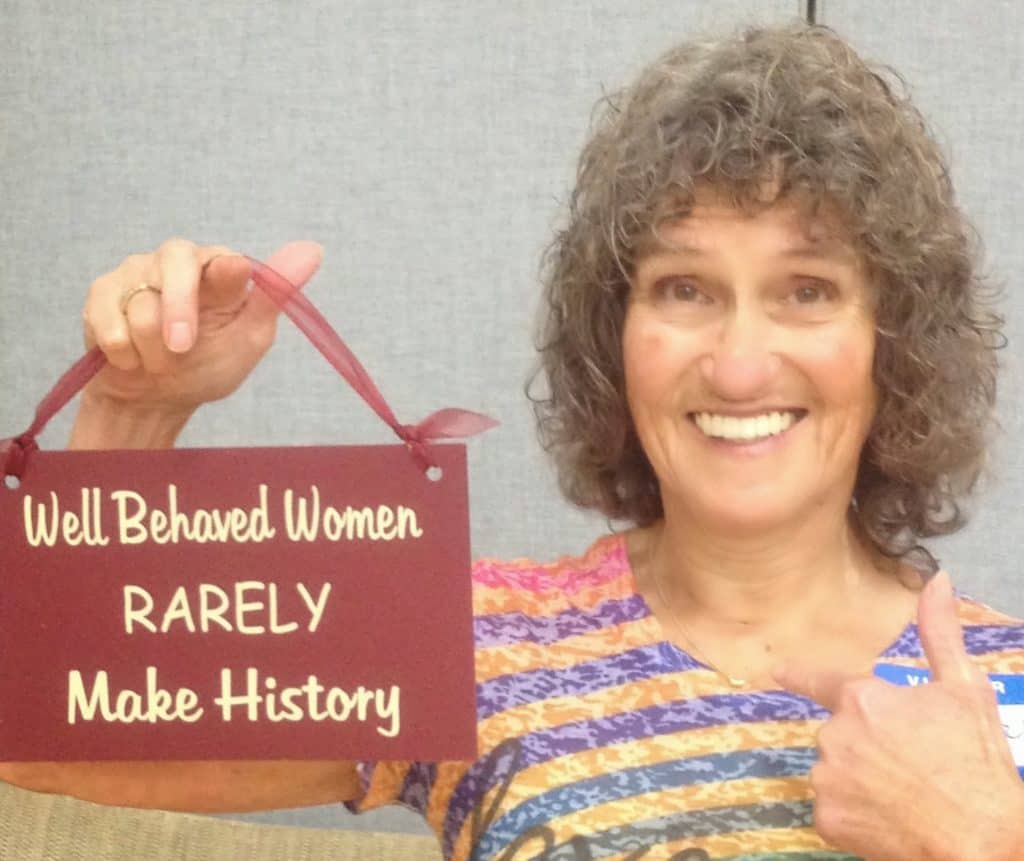
Anna Gallagher, Publicity Assistant at Seal Press, invited Seal authors to send in a short video talking about our favorite feminist quote.
Do you have a favorite quote for Women’s History Month? If so, I hope you’ll add it in a comment here.
3/18/14 update: Here’s the finished video from Seal with the favorite quotes of many Seal authors. I love the Anais Nin quote!
“Oral Sex” in a vibrator? LELO Ora review
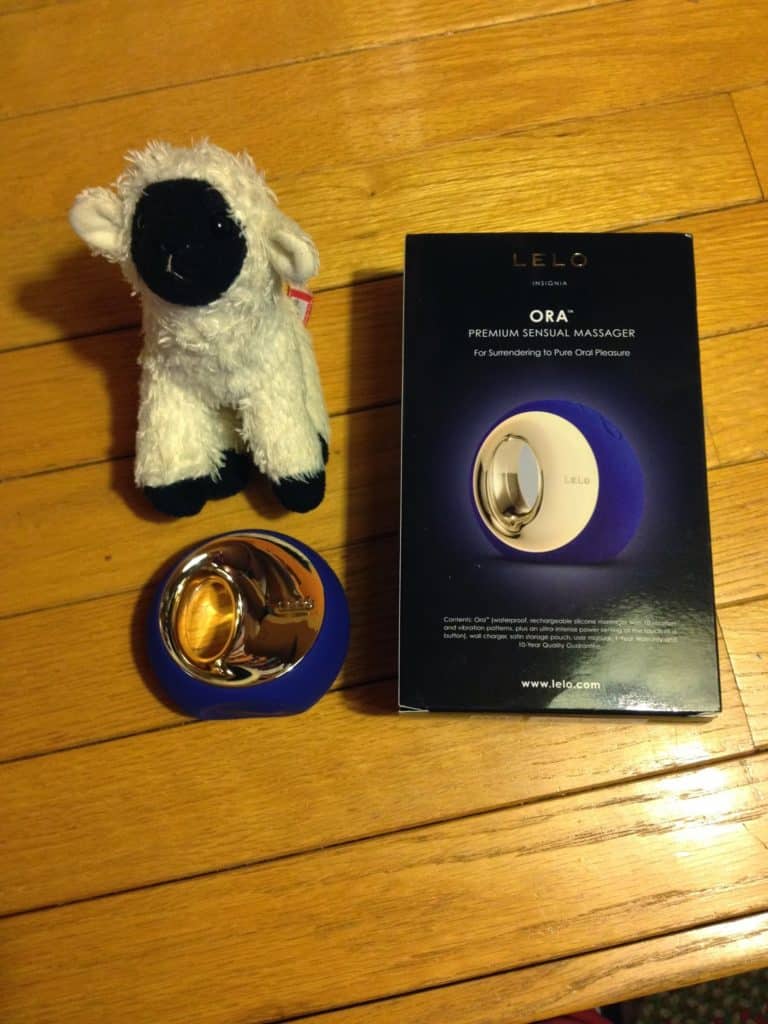
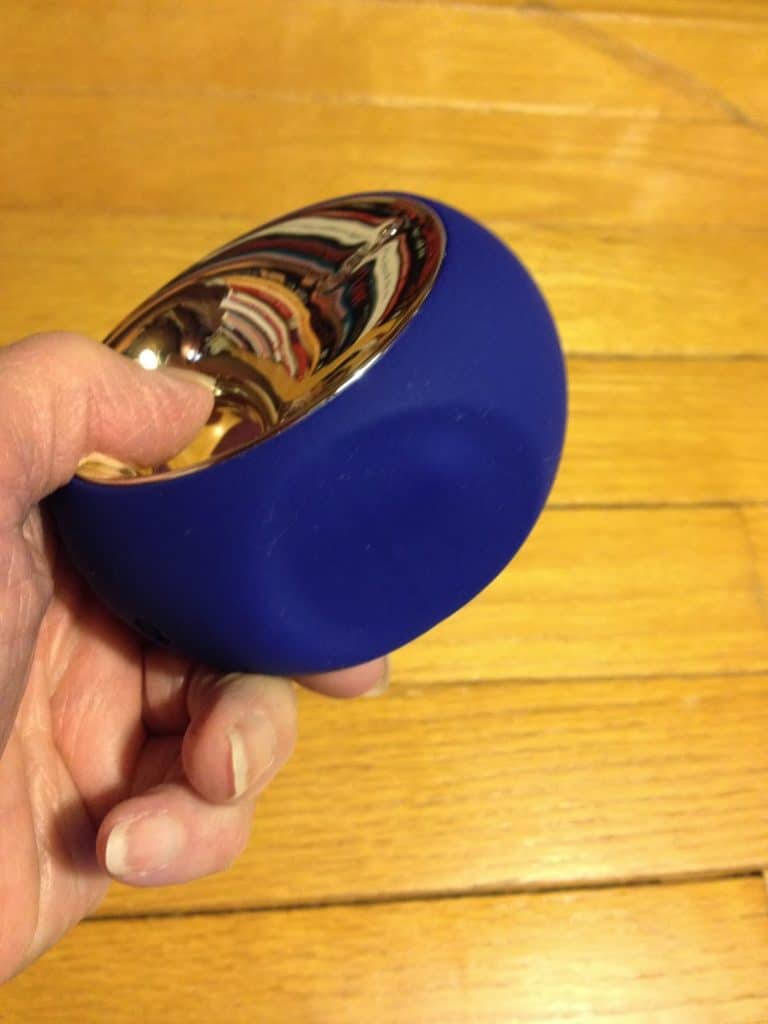 “Oh, please, please, please let me review the LELO Ora!” I begged the wonderful folks at Good Vibrations. A toy that simulates oral sex, made by the luxury vibrator company LELO, sounded like a winner.The description and video (bottom) made it sound lovely: silicone, beautiful design, with a nubbin that worked as a simulated tip of the tongue — swirling and flicking. Lots of patterns — some with all-over vibrations plus the “tongue,” some alternating, some just the tongue — and an intensity setting that claimed to be 30% over the manual settings.
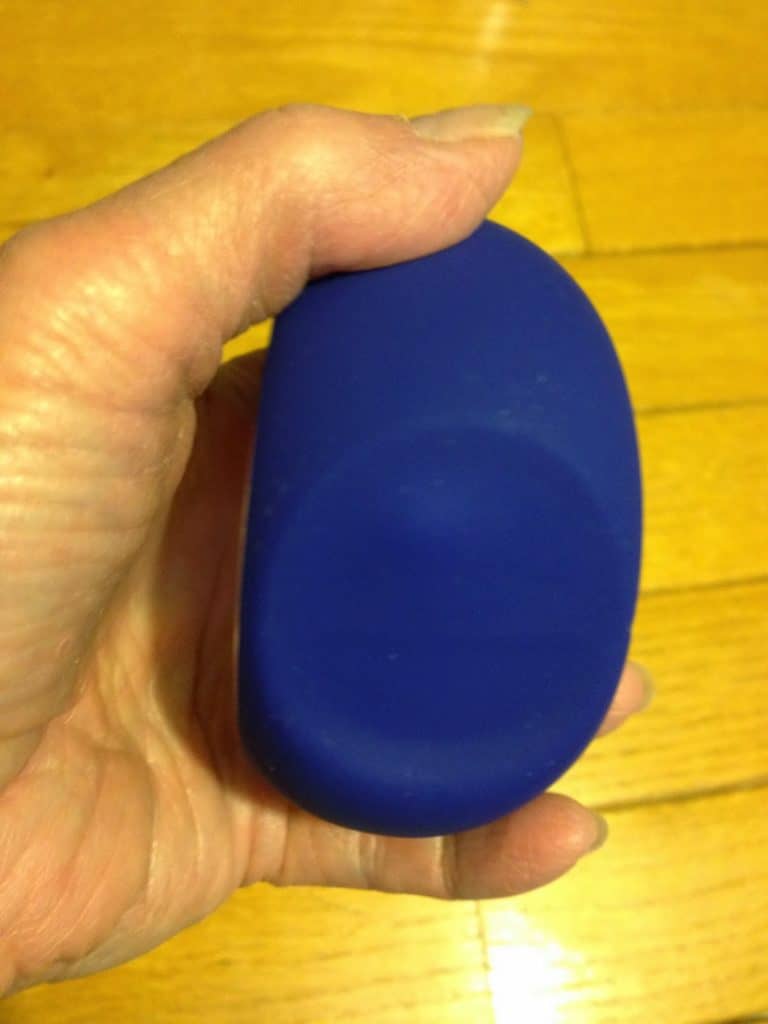 Great idea, lovely design, but Ora doesn’t live up to the claims, at least in my bed. The tongue flicks and swirls are very nice, but the nub is so small and the motions are so delicate that they don’t come close to doing the job for me. You might love it, if your clitoris is so sensitive that light flicking and swirling are all you need, but I I found the “tongue” way too subtle for any more than a nice warm-up. The vibrating patterns felt really good, especially at the strongest settings (which weren’t turbo, but still very enjoyable), but at the highest vibrations, the flicks and swirls were barely noticeable. (See update #4 below.)
The box and the marketing messages claim an “ultra-intense power setting at the touch of a button.” I couldn’t find any “ultra intense” setting, because as many times as I pressed the “+” button, the highest setting was intense, but not what I’d call “ultra intense.”
So maybe, I told myself, I didn’t understand how to find that highest setting.
I turned to the “user manual” and quickly became cranky: The so-called manual had warranty, safety and charging information for all LELO products in 12 languages — but nothing specific to this product and no instructions!
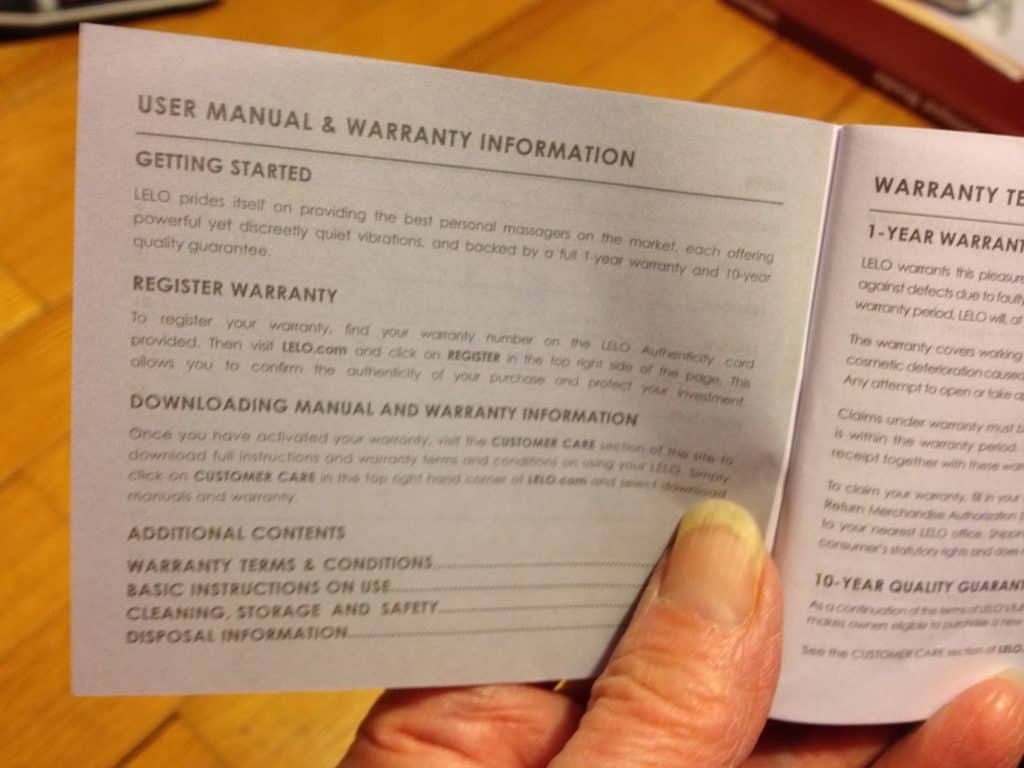 Finally I found it — all but illegible with its itty bitty grey font on grey paper, it said to go to LELO.com and click on Customer Care to download the manual. Come on, a $169 toy can’t have a page of instructions? A luxury sex toy company makes the “go to” notice practically impossible to read? Hello, LELO, I hope you’re listening.
Here’s where the LELO manuals are, so you don’t have to hurt your eyes trying to find it. Except — whoops! There is no manual for the Ora! I wrote to LELO:
Where is the user manual for Ora? It’s not listed, and the included “manual” has no information whatsoever about using this specific product.
I had no problem figuring out how to turn it on, cycle through the patterns, and turn the intensity up or down. But how do I access that mysterious “ultra-intense power setting at the touch of a button” that the box advertises?
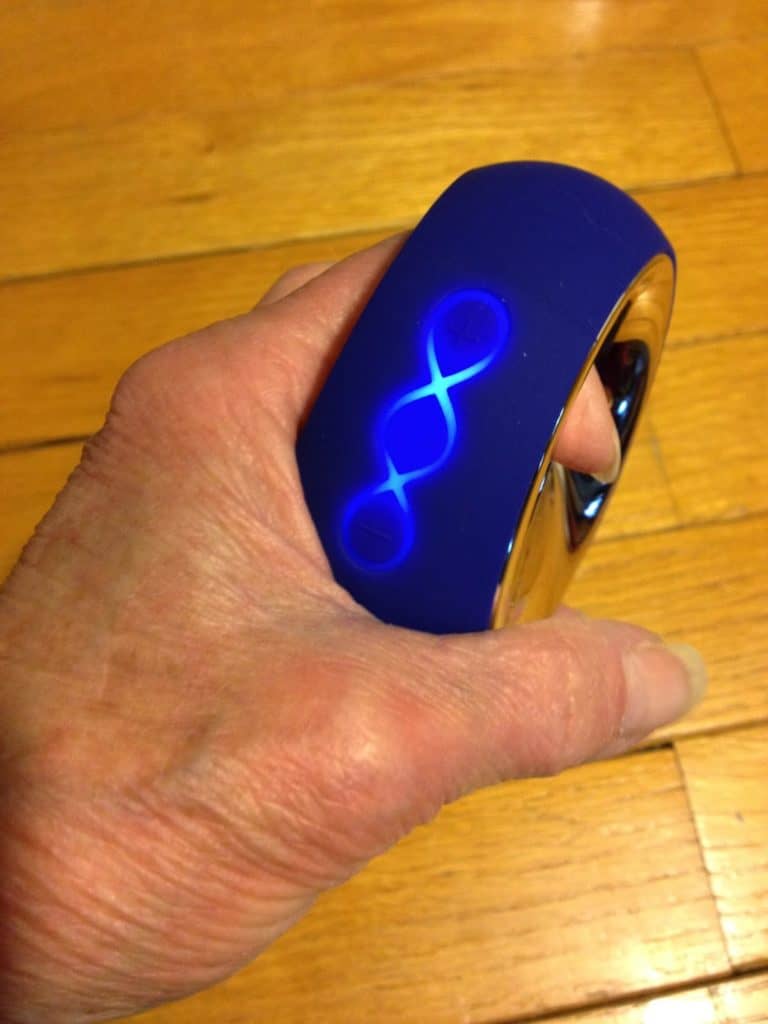 I got a prompt but unhelpful response from LELO, telling me how to turn the Ora on and off and cycle through the patterns. I knew that — as I had told them. I still wanted to know where the “ultra-intense power setting” was that was supposed to gives 30% increase on the standard maximum power at the touch of a button. If we were just supposed to cycle the “+” button until it could go no higher, then tell us that!
Undaunted, I wrote to LELO again with that question. I added:
I have many sex toys, including many LELO products. I
wonder how someone receiving this product as a first-timer would know how to
use it when there are no instructions included, and the promised manual is not actually there.
2/10 update #1: LELO wrote me this:
Dear Sir or Madam,
Thank you for your email.
If you press the center button, it will change mode, but
if you press and hold it for 3 seconds, it will change to the ultra-intense
power setting.
Aha, there’s what I wanted to know. Why isn’t this in the instructions? Oh, right, there are no instructions. Then why isn’t this printed on the box? We’re just supposed to intuit that we press and hold the center button for 3 seconds?
I’ll try it and get back to you. Didn’t want to make you wait for this piece of the puzzle.
2/11 update #2: LELO answered my “Why isn’t this information provided on the box, in the instructions (whoops, there are no instructions), or in the video? How are users supposed to know this?” with this:
Our intention was let our customers “discover” it, however I will suggest our departments do some changes about the instruction in case more customers cannot find it.
2/21 update #3: Just received a lovely, personal email from Kathryn Catney, Communication Specialist at LELO, who actually read my review here (and is a “big fan” of my blog). She apologized for the lack of instructions and the useless responses from the Customer Care rep. She said that I must have received an early sample (true), and that all the purchased Oras come with a full “How to Use” manual, which is now online here.
2/26 update #4:
I’ve retested Ora twice with the new knowledge of how to find the “ultra-intense power setting.” Yes, it’s better with that setting, definitely. However, the shape of the vibrator, while gorgeous and enabling it to stand upright when not in use, prevented it from working right for me. The “tongue tip” section is recessed. I would have preferred that it balloon from the vibrator rather than recede. The vibrating ring of the vibrator was very nice, but the “tongue” part was still barely noticeable. Sorry, LELO.
We’re all different shapes and sizes, including our genitals, so this might be just right for you. Clearly a lot of research, development, and attention to design went into this lovely product. It felt nice, yes, but in the end, it didn’t do the job.
All in all, I think the Ora is a great idea, but if your idea of the perfect vibrator is the Magic Wand (reviewed here), you’ll be disappointed. However, if you prefer a lighter touch and the idea of subtle swirls and flicks makes you quiver, the Ora might become your new best friend.
Thank you, Good Vibrations, for sending me the Ora and always being supportive of older-age sexuality.
Valentine’s Day Reflection
For many of us who have had many decades of relationships, Valentine’s Day is a time to reflect.
Personally, I am glad for every relationship in my life, whether or not it turned out to be right for me. Each one helped me refine who I was, what I had to give a partner, what I was looking for, and what sustained me and stimulated me vs. what boxed me in or hurt me.
I’ve remained close friends with past lovers and my first husband, and I treasure them in my life now. These are men whom I’ve loved and love still, and I know they feel that way about me, too.
Other past lovers I’ve lost touch with, but would love to bring back for a conversation about the past and the present.
 Of course Valentine’s Day is also about missing Robert, as it is for you if you’ve lost your love. But instead of today being all about loss, let’s let it be about what we’ve found over our long life of loving.
I’d love to involve you in a discussion of how we see past and present relationships, what we’ve learned from them, what we see — or hope to see — in our future. Please comment and get the conversation going.
If you don’t want to use your name, please identify yourself with a first name of your choice — let’s not have a string of comments from “Anonymous,” okay? Please include your age.
(Do I really need to say that “please comment” is NOT an invitation to be spammed by purveyors of pills, porn, jelly toys, escorts, or other products and services? I moderate comments, and my community trusts me to keep the spammers out of the conversation. If, on the other hand, you’re an author, educator, or blogger in a relevant field, I’m happy to have you include a link with your comment.)