
Posts by Joan Price
Iroha: Cutest Vibrators Ever

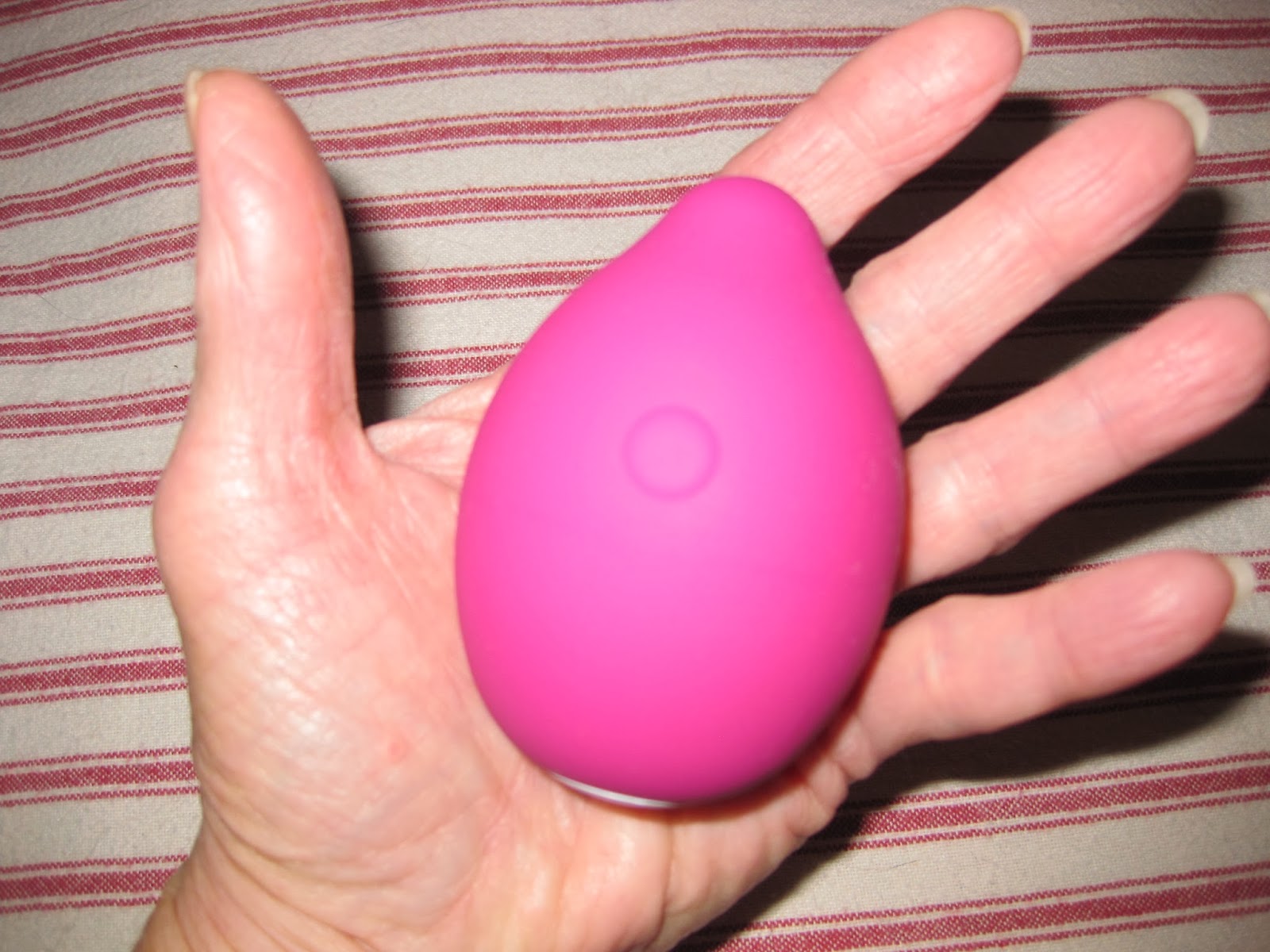
The Iroha Rechargeable Silicone Vibrators from Tenga are adorable and cushy. I want to cuddle and squeeze them. And yes, they’re dynamic little vibrators, and they work! It’s hard to imagine one of these without being able to touch it firsthand, so I hope my description helps: The vibrator has a cushy layer, covered by a body-safe silicone skin. It’s not soft through and through (there’s a motor in there) — just a layer — so you can press firmly and feel just a little cushioning, or press lightly, and it all feels soft. Delightful.
You can choose from three distinct styles:
 Midori is green, sort of egg-shaped with a nubby protrusion. The big part stimulates the whole vulva if you lay it cushy side down,or you can elevate it and position the nub directly on top of your clitoris. The nub is harder than the rest of the Midori for more targeted pressure and less cushion.
 Yuki is white, figure-8-shaped with a smaller and larger end. Again, you can lay the whole thing down over your vulva and get stimulation everywhere. Or you can press the smaller part shallowly into your vaginal entrance. Some might scoff at how small the penetrating part is, but for those of you with vaginal pain and/or tightness, it could be just right for pleasure without pain. Yuki doesn’t have any hard parts — it’s all cushy, with some parts especially soft. This was my favorite and seemed the most versatile, though your mileage will vary.
 Sakura is pink, oval-shaped with a flexible, V-shaped, squishy notch that can hug the clitoris. It looks like you could use the notch to pinch a nipple in a stimulating fashion, but you really can’t with lubed fingers — too slippery. Try it dry for nipple play. Well lubed, it does hug the clitoris in a lovely way if you just position and press. This was almost my favorite.
All styles have these lovely qualities:
-
- The whole thing vibrates. It doesn’t matter how you position it, whatever touches you is vibrating.
- It’s easy and ergonomic to hold. No wrist tweaking, just cup it (control side towards the hand) and press, glide, rub, tap, or circle on your vulva.
- The controls are large and easy to see and use. You won’t turn it off by mistake. Your lubed finger may slip off the button, but it’s still much easier than most.
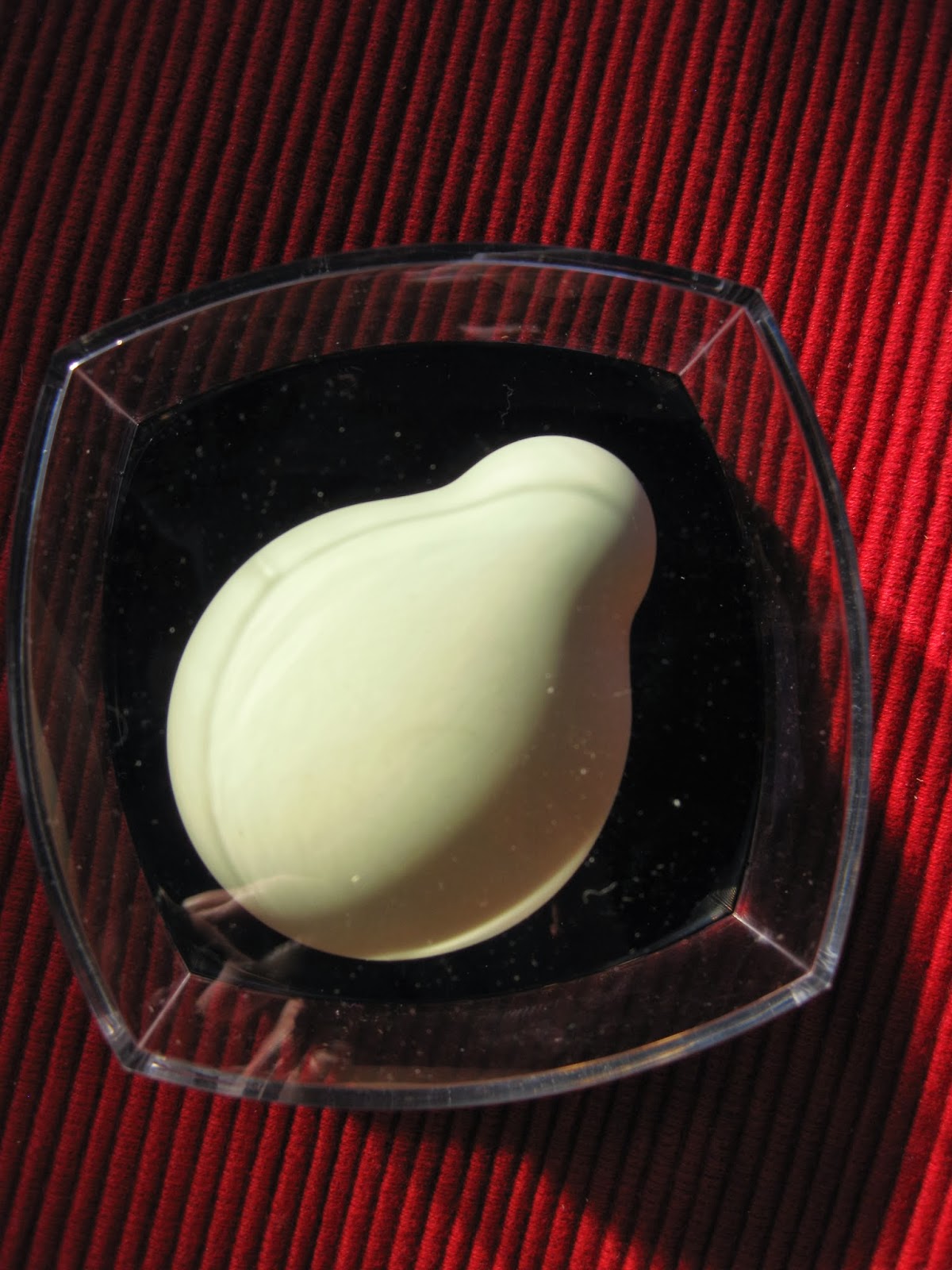
- It’s self-charging with an elegant charging base and storage lid. Charge it by USB or plug it into an electrical socket with the provided charger.
Yes, of course I wish these were stronger. I always wish that. The settings take them from gentle to medium to strong, plus a pulsation pattern. For you, strong might be plenty strong. The older I get, though, the more intensity I need.
But I’ve also discovered the pleasures of using a toy that feels as good as these softies do, then upping the ante at the very end with my Magic Wand. Just a suggestion for those of you who, like me, need a long time and lots of intensity, but enjoy the feel of a soft toy like one of these.
I love how long these vibrators last before losing their charge! I couldn’t believe the claims that it kept a strong charge for 90 minutes. “Maybe on the lowest setting,” I scoffed. So I tested Midori’s duration by letting it run on the highest setting until it stopped — a full hour and five minutes! Granted, it lost some intensity long before it actually stopped, but still, that’s a long time for those of us with slow-burning arousal!
Use plenty of water-based lubricant, especially with post-menopausal, thinning tissues. Otherwise, the silicone skin starts dragging or pulling on vulvar skin and pubic hairs. Lube is your constant companion anyway, right?
 I’m glad I read the itty bitty directions in the accompanying manual and the “Water-resistant, do not submerge” on Good Vibrations’ Iroha page, because I would have guessed it could be taken into the shower or tub. Nope — although it can be cleaned in water, it doesn’t like hot water or staying wet or humid.
These Iroha toys are designed for vulvas, though of course they can used by any gender and any external erogenous zone. Thank you, Good Vibrations, for sending me these sweet toys to review!

Minna Limon: Cute, Squeezable Vibrator
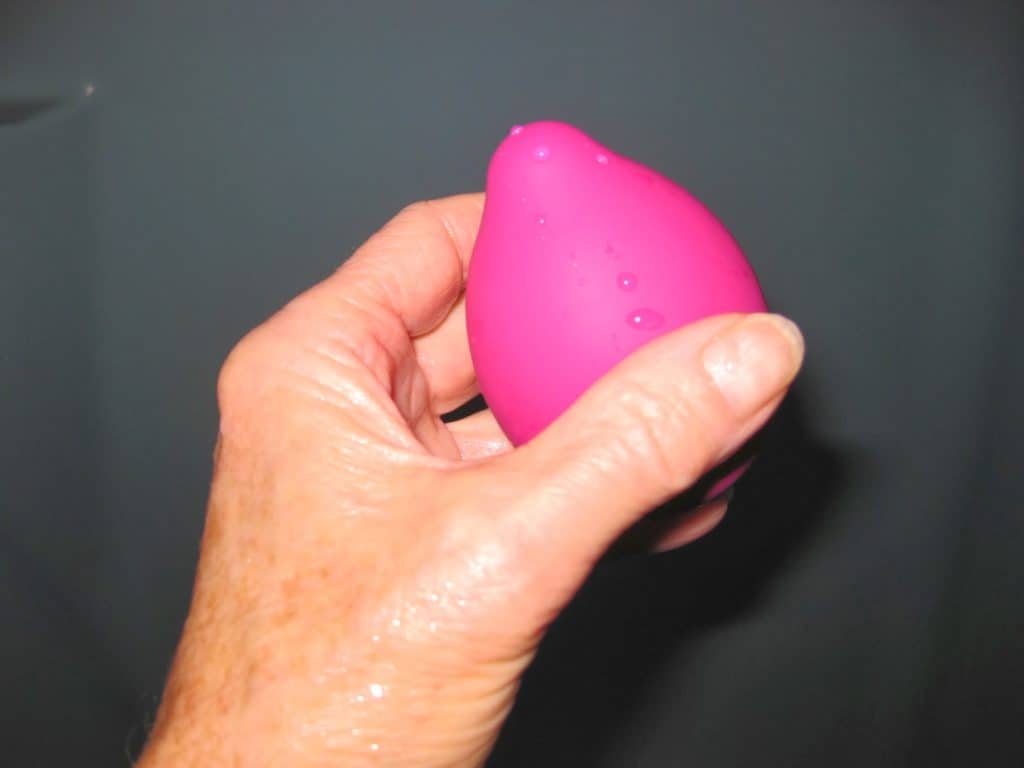
I like my new Minna Limon so much that I’m starting to think of it almost as a pet rather than a product.It’s cute, touchable, squeezable, fun to play with, and responsive. But no, it’s not a pet — it’s a vibrator, and it’s a delight. This is a great gift for a loved one, a pal, or yourself.
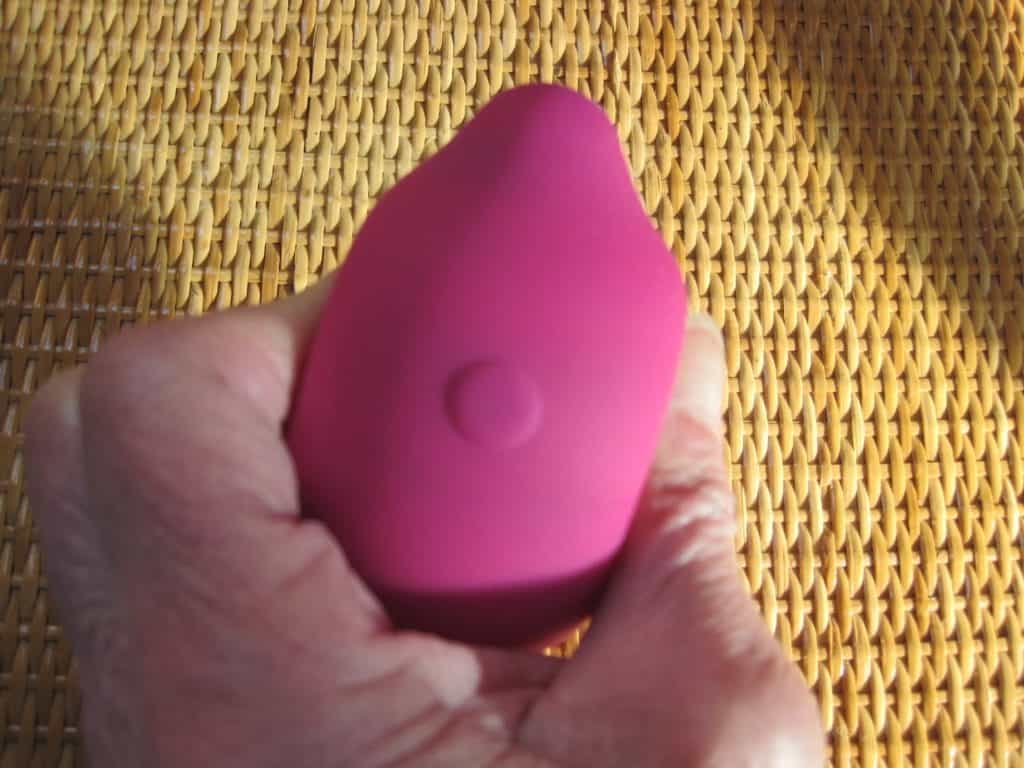 It works like this: Power it on with the button, then squeeze the sides of the Limon. The harder you squeeze, the stronger the intensity. I love this idea!The Limon is squishy soft on the sides, but the little bud at the tip is firm. If you want a firm touch on your clitoris, use the tip. If you like the vibrating squishiness all over your vulva, use it side down.
You can hold it with your hand, or squeeze it between your thighs, mostly hands free. (I say “mostly” because it will skitter out of position unless you give it a hand from time to time.) Just be careful to position it so that you won’t accidentally press the control button.
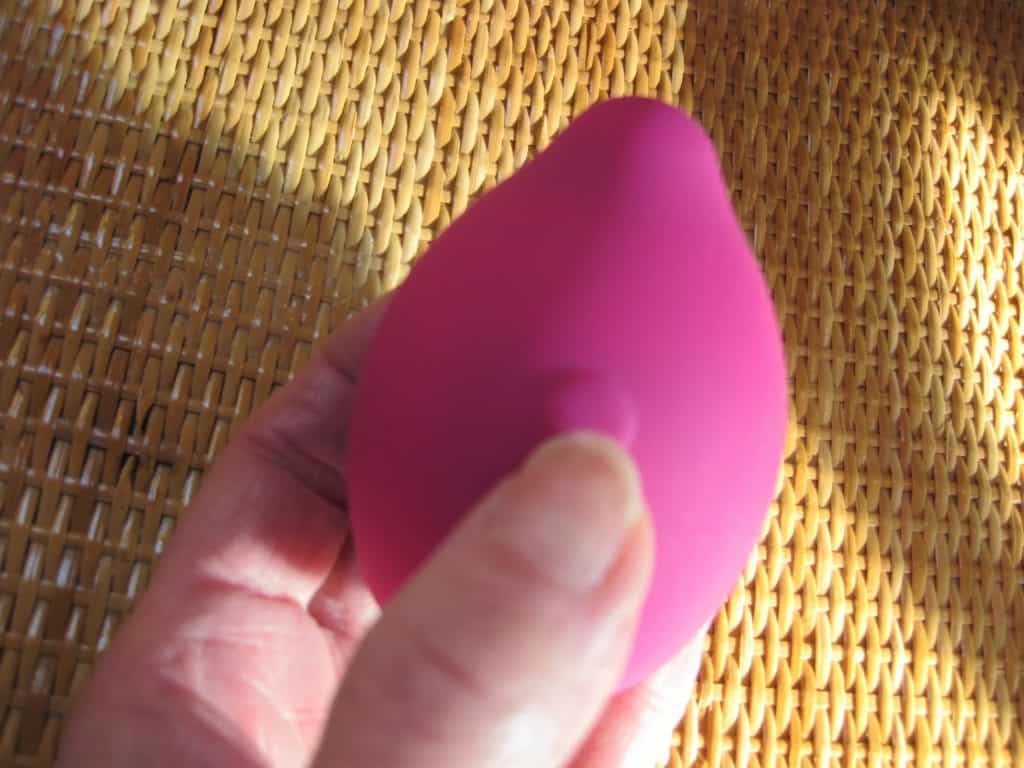 You can even record a pattern. It’s easy. One press of the button powers on the Limon, a second press sets it recording. Do any pattern of vibrations and intensity that you want, for example, “quick-quick-cha-cha-cha-slowwwww” or gentle-stronger-INTENSE” or any pattern that appeals to you. Then do one more press to lock in the pattern. Now it will loop your pattern until you press again to unlock or hold down the button to power it off. (Once you do that, you’ll have to re-record the pattern next time you turn it on.)
Your question about constant speed vibration is a good one. Yes, we designed Limon to make this very easy. Here’s how you create a steady vibration:
1. Put the device in “Free Play” mode (only the power light will be on, such as right after you turn it on).
2. Squeeze Limon to your desired intensity. Strong, soft, or anything in between.
3. While squeezing to your desired intensity, do a slow double click of the button. Then you can stop squeezing. This puts Limon in “Lock Mode” with your desired intensity being looped.
That’s it! Just double click the button while squeezing in Free Play mode.
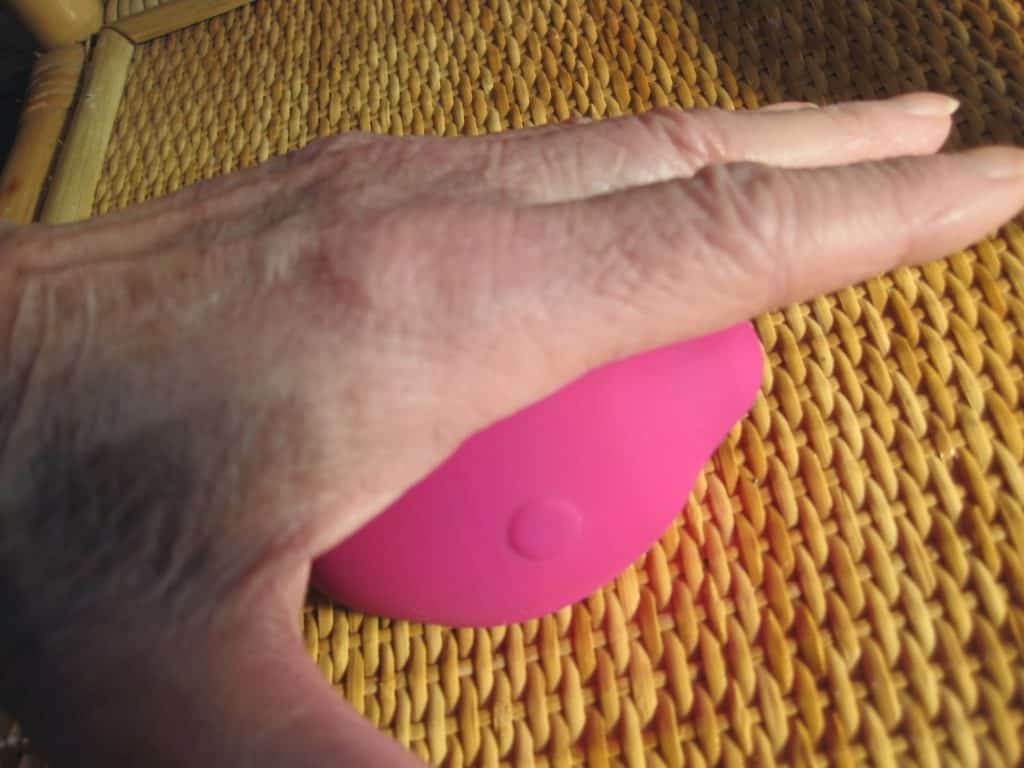
It worked! Now I can just gently hold the Limon in place for as long as I want while it vibrates on the strongest setting, with no arthritic stress at all.
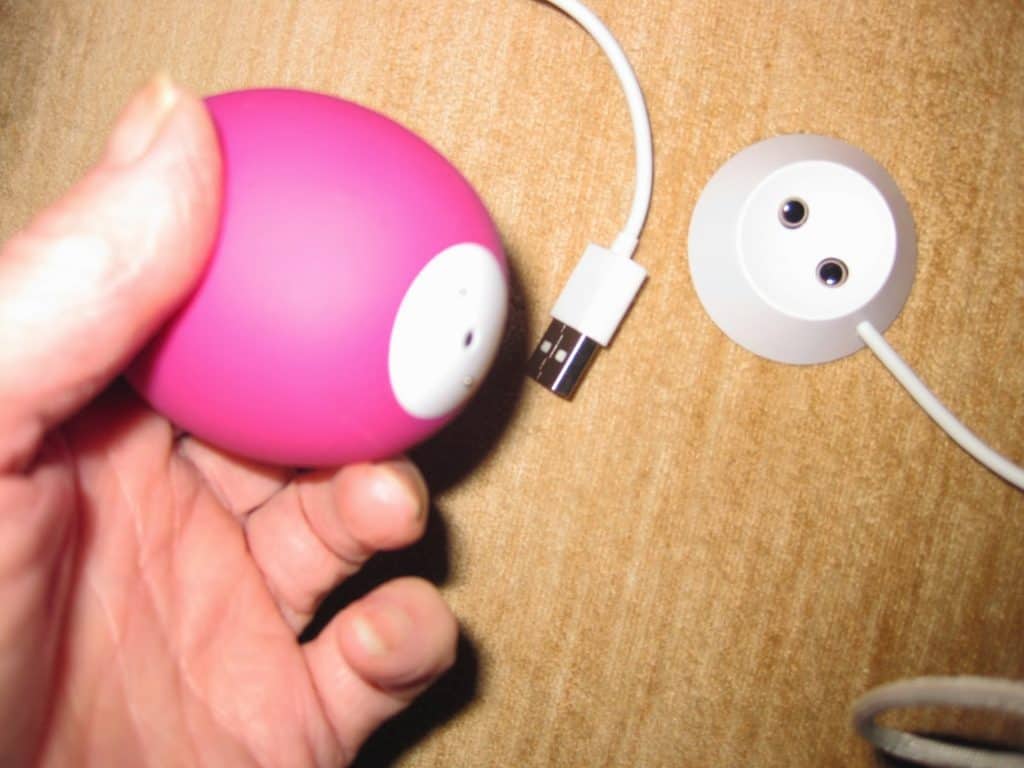
- USB rechargeable (it sits on a magnet base and lights up as it charges).
- Made of body-safe silicone (use a water-based lubricant).
- Tiny and light for travel opportunities (best to put it in checked luggage rather than carry-on — we don’t know what the security folks will ask, or whether they’ll believe us if we tell them).
- No fumbling with controls with lube-covered fingers if we want to change the intensity — just keep it in Free Play and squeeze away.
- Holds its charge for a long time.
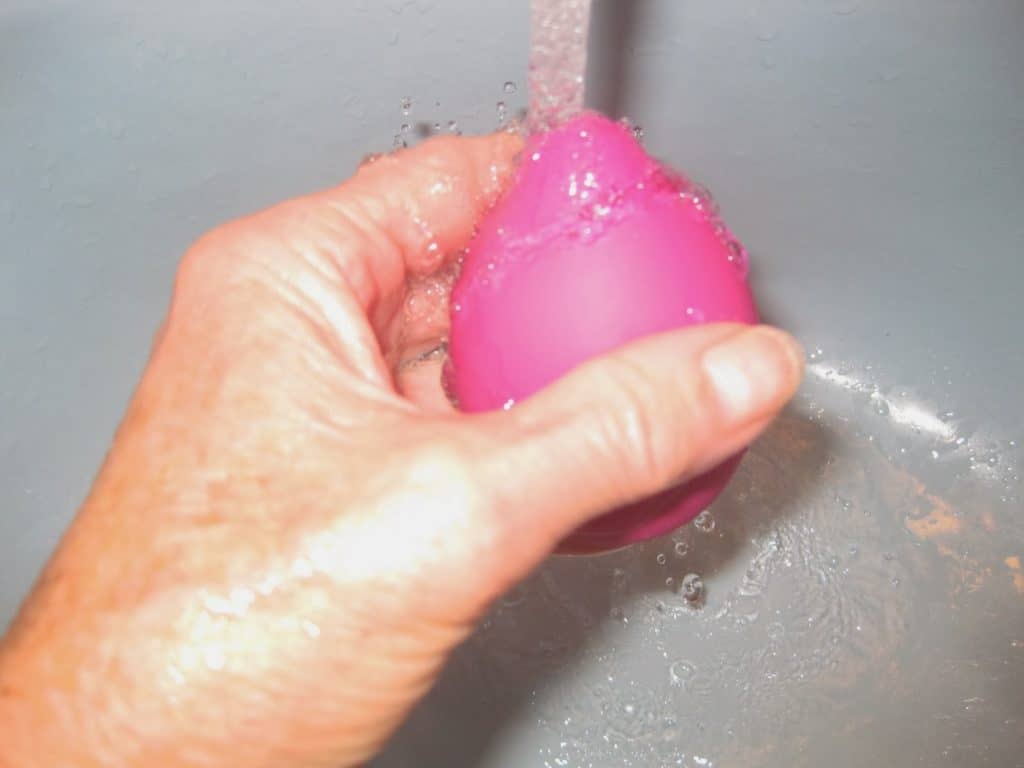
- Waterproof, so arousal can start in the tub or shower.
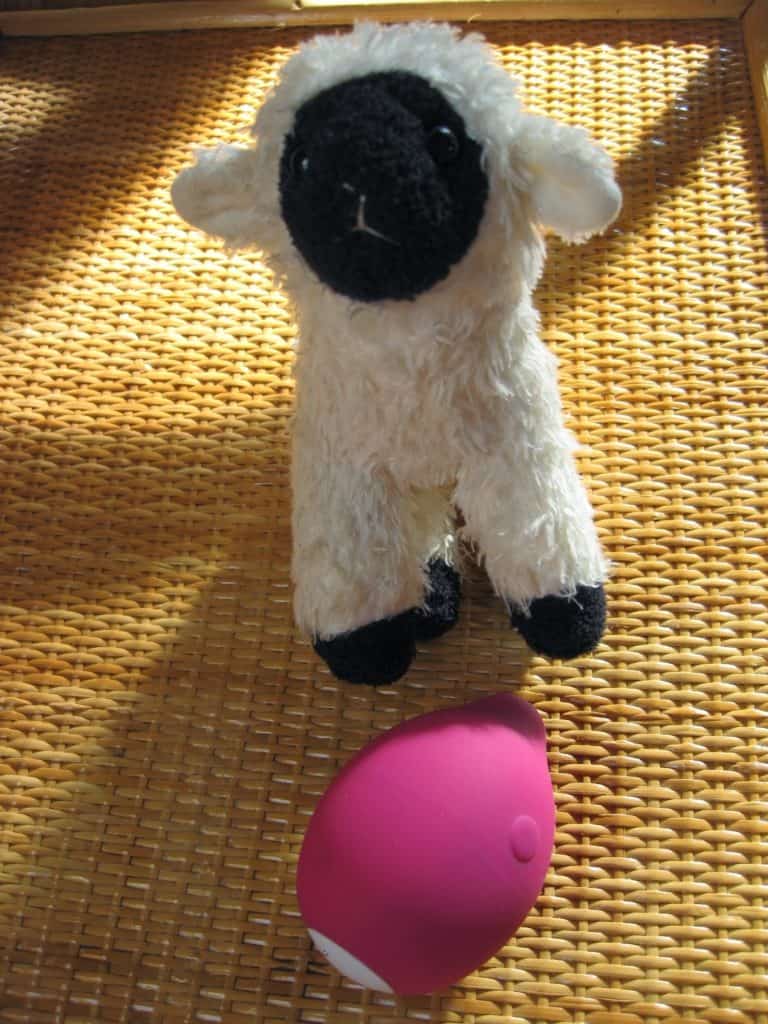
- So cute you’ll want it on display.
What do I wish were different?
[Minna Life provided me with a free Limon in return for an honest review.]
Cancer Survivor: Can I Have an Intimate Relationship Again?
A reader wrote:
I am 62, single, and once was a very sexually active woman. I’ve undergone treatment for breast cancer twice. My recovery required my full attention for years, but now I feel ready for new adventures — hopefully including sex. After rounds of chemotherapy, surgeries, radiation, and continued estrogen blocking medications, sex with another became a thing of the past.
Currently, sexual intercourse may no longer be possible for me — but I still enjoy having orgasms and I desire the wonder of touch.
However, I am so concerned about my limitations as a sexual partner that I am afraid to attempt to date again.
I have no idea what men in my age group expect or desire in terms of performance from their partners. What are woman experiencing in the 60-year-old dating world in terms of performance expectations? Would my current physical circumstance deter most men from being interested in exploring an intimate relationship with me?
I am grateful for this message and all it conveys about hope and healing and moving forward. I understand why you’re apprehensive. I would encourage you to get out there and go after what you want.
I know that many single men in our age group also fear “performance expectations” when erections are no longer possible or predictable. There are many who would welcome a sexual partner who did not expect intercourse, who would be happy exchanging touch, oral and manual stimulation, and fabulous orgasms — without intercourse.
These men may be cancer survivors themselves, wanting to return fully to life, including sex and intimacy, but they don’t know how to navigate the dating world either — when to divulge the cancer, when to divulge the sexual issues.
You might find out if there’s a local cancer survivors’ singles group. Or try online dating: I did a search on “cancer survivors singles” and came up with several sites that promote themselves as dating sites for cancer survivors.
 There’s even one — “2date4love” — that “enables people who cannot engage in sexual intercourse to meet and experience love, companionship and intimacy.” I haven’t vetted any of these sites — if any of you have tried them, I hope you’ll share your experiences.
You don’t need to limit yourself to dating companions who share a similar medical history, though. Just be up front about your cancer on a first date if it looks like there’s potential for a second date. (If not, you don’t need to mention it.)
Then if you progress to a few dates and there’s chemistry, it’s important to explain that yes, you are interested in sex, but no, this might not include intercourse. Be prepared: Men who desire intercourse may want to discontinue getting to know you, and that’s okay.
When all the cards are on the table, if the relationship progresses, you have the delightful journey of exploring all the ways you can be sexual without intercourse!
Even when a date doesn’t progress to more, it’s still worth getting to know new people, “practicing” dating, trying out how to tell a potential partner about your needs, desires, and challenges.
If you take it all as part of the brave new world of dating experience, you don’t need to feel regretful or shamed when a new relationship (or potential relationship) doesn’t work out. Most of them will not work out — that’s the nature of the game.
 Everything I’ve said so far presumed that you’re right that intercourse will not be possible for you. But please explore whether there are ways that you can heal yourself vaginally, if this is something you want to pursue. An excellent resource is “Vaginal Recuperation after Cancer or Surgery” from A Woman’s Touch, one of my favorite sexuality resource centers.
I hope you’ll check in again and share what you tried, how it worked for you, what you learned and gained.
I hope that you’ll share your thoughts, too, readers.
Gen Silent: Watch for free by 1/1/14

Please make time to watch Gen Silent. The producers of this LGBT Aging documentary have made it available free for home streaming through New Years Day 2014.
Gay, Lesbian, Bisexual and Transgender older people who fought the first battles for equality now face so much fear of discrimination, bullying and abuse that many are hiding their lives to survive. Thousands are dying earlier than their straight counterparts because they are isolated and afraid to ask for help. But a growing number of people are fighting to keep
LGBT aging from meaning aging in silence.
“LGBT elders are going back in the closet.”
“In the first nursing home, we weren’t welcomed there as a gay couple.”
“They [caregivers] didn’t want to touch my body.”
“You just know when they don’t want you there. When you feel they don’t want you, you’re in a state of stress.”
“All I can do is sit in shadows, holding his tissue-paper hand, watching him breathe.”
These are comments from LGBT elders speaking out about the prejudice, hostility, and fear they face. No, not just when they were young, but now — in long-term care facilities, from caregivers, and from medical providers.
 KrysAnne, a transgender woman, is living alone at the end of her life. “Most people who transition expect losses, but I didn’t expect to lose everyone,” she says. “For two years, I desperately tried to connect with my family. In some cases the letters weren’t even opened.”
One letter that was returned contained the message, “So glad someone finally took off your balls. What do you call yourself now. FREAK or IT??”
Thank you, filmmaker Stu Maddux, for making this stunning documentary and for providing it for free streaming right now. I’m not permitted to embed the video here, so please click here to watch it.
I am permitted to embed the trailer:
After you watch the film, I hope you’ll contribute your comments. (By posting here, you’re giving me permission to use excerpts from your comments in my new book, The Ultimate Guide to Sex after Fifty, without identifying you in any way.)