
Posts by Joan Price
Erectile Dysfunction: Michael Castleman Talks to Men

8/18/11 update: I’m bringing this older post to the top because it answers so many of the questions about erectile dysfunction that my readers are asking. Michael Castleman is also one of the experts in Naked at Our Age and I respect his knowledge and ability to convey important information simply and compassionately.
So many readers–both male and female–have been asking for information about erectile dysfunction that I asked Michael Castleman, a sex educator, counselor and journalist specializing in men’s sexuality to answer some questions. His interview starts here and continues here.
Q: Explain erectile dysfunction (ED) and why it happens.
MC: Only a small fraction of men from age 45-60 have true ED. A larger but still modest fraction of men over 60 have true ED. True ED is the inability to raise an erection despite vigorous extended hand massage of the penis. True ED is usually the result of a medical problem, either a problem with the nerves that control erection, or more likely, narrowing of the arteries that carry blood into the penis. Like the arteries of the heart, the arteries into the penis can become narrowed by atherosclerotic plaques. Causes of plaque formation: heart disease, diabetes, smoking, high blood pressure, high cholesterol, high-fat diet, sedentary lifestyle. In other words, all risk factors for heart disease are also risk factors for ED. In addition, ED can be caused or aggravated by stress and anxiety, which constrict the arteries and limit blood flow into the penis.
Q: What about men who are capable of erections, but they’re less reliable than they used to be and require more stimulation?
MC: While only a fraction of men over 45 experience true ED, just about every man experiences what sex therapists call “erection dissatisfaction” (EDis). After 45 or 50 or so, men with EDis can still raises erections, but they don’t rise as quickly as they used to. They no longer rise from fantasy alone–seeing an attractive woman or some erotic scene. Men begin to need direct penis stimulation by hand or mouth. When erections rise, they may not look/feel as firm as they were in the man’s 20s. They may also droop from minor distractions, anything from donning a condom to hearing a motorcycle roar up the street.
The good news is that EDis is a normal and natural part of aging. If older erections wilt a bit, hand massage and/or oral stimulation bring them back up again–IF the man remains relaxed and patient with himself. If the man gets stressed and anxious, this reduces the likelihood of a return to fullish erection.
Many (most?) older men are unclear on the distinction between true ED and EDis. Many mistakenly think they have ED when they experience the normal age-related erection changes of EDis. Now EDis can be disconcerting. I’ve been a sex educator for 30 years. I knew all about what happens to erections after 50. But when those changes started happening to ME, I found them unnerving. P.S. Erection medication (Viagra etc) helps treat EDis. In fact, most men who take erection drugs don’t have true ED. They have EDis.
Q: Many men fear that they can’t please a woman without an erection, or they give up on sex altogether. Is an erection necessary for sex?
MC: Of course not. As you know, women’s pleasure organ is the clitoris. Many women prefer cunnilingus to intercourse. Surveys show that only 25% of women are reliably orgasmic from intercourse, no matter how vigorous or how long it lasts. So women know that an erection and vaginal insertion are not necessary or sufficient for sexual pleasure and orgasm. But many men DON’T know this.
Q: How did men’s sexual education skip that important concept that women’s orgasms are based on clitoral stimulation, and that most women don’t need penis-in-vagina penetration for their pleasure?
Most men get most of their sex ed from pornography. Porn is totally penis-centered. Porn actors have monster cocks, which makes normally endowed men feel they’re “too small.” Mainstream porn includes a bit of massage and cunnilingus, but it’s mostly about sucking and fucking, so that’s what men come to believe sex is all about.
I’ve spent my life as a sex educator and counselor trying to persuade men that they’ll have better sex and get better reviews from women if they ditch their preoccupation with their penis and focus instead on leisurely, playful, whole-body, massage-based sensuality. But compared with porn, which is viewed overwhelmingly by men and is by far men’s #1 source of sex ed, the combined voices of every sex expert on earth amount to a little whisper in the hurricane of porn porn porn.
Here’s where I plug my book, Great Sex. Its message to men: If you want great sex, if you want women to sing your praises as a lover, stop trying to imitate porn. In fact, do the opposite of what you see in porn. Not only will she be happier, you will be, too. You’ll enjoy sex more and have fewer sex problems–more cooperative erection and better ejaculatory control.
Michael Castleman, M.A., is the author of twelve books, including Great Sex
: The Man’s Guide to the Secrets of Whole-Body Sensuality and Sexual Solutions: For Men and the Women Who Love Them. From 1991-95, he answered the sex questions submitted to the Playboy Advisor. Visit his website about sex after midlife, http://www.greatsexafter40.com//.

Doctor, Doctor, Talk to Us about Senior Sex

Angry and/or bewildered readers write me or raise their hands at my talks with tales of doctors who can’t or won’t inform them about sex.
Just a few of the many examples seniors have shared with me:
- One woman described how her oncologist bolted from the room when she asked how her cancer treatment would affect her sexuality.
- A man emailed me that he finally got the nerve to tell his doctor that he could no longer have erections. “You have ED,” he was told, and that was that. I was the one to tell him that ED is a symptom, not a diagnosis, and he needed to get tests run to find out what was going on.
- Several women with vaginal pain reported that their doctors offered them no help other than telling them their vaginas were “normal” and they should just use more lubricant. A referral to a vulvar pain specialist or a pelvic floor therapist would have helped these women enjoy sex again.
- Several men told me that they were never told that treatments for their medical conditions would interfere with their erectile difficulty and that other options were available.
A woman at one of my bookstore talks told a roomful of sympathetic listeners that after a hysterectomy at age 70+, she asked her doctor what she should know about resuming sex. He asked, “Do you have a partner?” “No, she replied. “Then you don’t need to worry about that, do you?”
When I retell this story in different parts of the country on my travels, there’s always someone who says, “I know that doctor!”
 I always rush to defend doctors, being a doctor’s daughter and a doctor’s sister, and having had my own life saved and quality of life restored by brilliant medical professionals.
But that doesn’t mean that I think doctors and other medical professionals adequately address senior sex — they do not. I know that their medical training barely addresses sexuality at all, and doesn’t deal with senior sex whatsoever. Unless doctors make an effort to educate themselves (and bless ’em, some do!), they just don’t know what to tell us.
I give my readers and audiences tools for talking to their doctors, for example, saying, “If you can’t help me with this, give a referral to someone who can.”
The worst thing we can do is keep silent about our sexual challenges or mumble and give up.
I invite your comments — your stories about doctors who have or have not helped you regarding your sexuality, and especially what you would like doctors to know about what we seniors/boomers/elders need from them in that realm.
For example, Ron posted to my Naked at Our Age Facebook page (which I hope you’ll visit and “like”!), “Docs need to be up on the sexual side effects of medications and we need to be sure to tell docs we don’t want any meds that somehow reduce our libido or capability.”
Your turn!
Grief Sucks
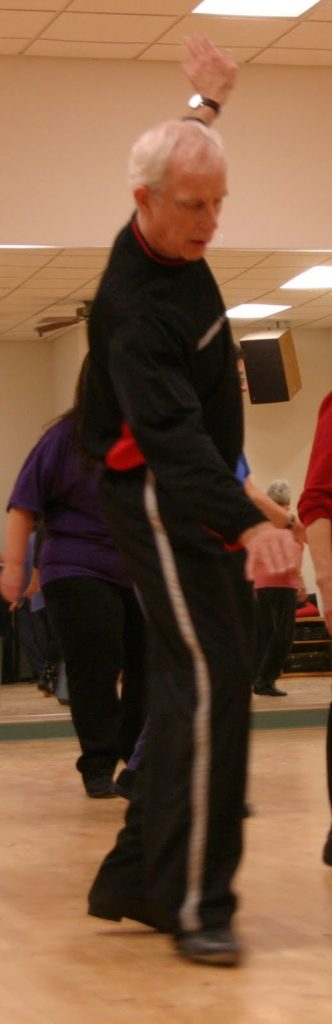 Last night, I burst into tears in the locker room of the health club where I teach line dancing. I haven’t done that in a long time, and it surprised me, but I couldn’t control it.
We’re coming up on the third anniversary of Robert’s death August 2, and the dance class was a huge part of our love story. We met in my class and we fell in love there. The loss happened there, too — he announced his cancer diagnosis to the class, kept dancing even as he got weaker, until he finally couldn’t do it any more.
“Dance with Joan, and you’re dancing with me,” he wrote in a letter to the class when he needed to tell them he wouldn’t be back.
The first year after Robert died, I cried after dance class on a regular basis. I also cried in private, in public, in my car. I cried in the park, at the DMV, at Trader Joe’s, in the doctor’s office, walking along the street.
I couldn’t help it. It was like my heart caved in and squeezed out huge, unstoppable waves of sobs. I wailed, too, but at least I could hold back the screams until I was in a private place (though my neighbors came running once).
Do I miss Robert still, almost three years after his death? Only when I breathe. Only when I open or close my eyes.
 Oh, I function very well. I write, I teach my dance classes, I travel talking about senior sex — my favorite subject! How lucky I am to get to spend my day doing what I love!
I laugh a lot and I make others laugh. I learn, I teach, and what I do helps other people. I do find joy in my life. It’s a good life, I know that. I’m even kinda sorta dipping my toes into dating, as you know from my (very infrequent!) posts about dating, such as this one.
But I’m not done with grief, perhaps I never will be. Those of you who have lost a loved one know the grief journey isn’t predictable. You can be doing just fine, and then, boom, you burst out crying in the locker room.
The emotional stab wounds close up, then rip open again. I know this is “normal” because grief isn’t linear, it’s cyclical. Thank goodness, each year it gets easier to cope. As my uncle, psychotherapist Larry LeShan who lost his wife of 58 years, says, “The knife still keeps stabbing, but not as deep or as often.”
I didn’t want to call this post “Grief Sucks.” I don’t like the term, and personally, I think sucking is a delightful pasttime and shouldn’t be associated with a negative experience. But hey, this post wrote itself and insisted on that title. Sometimes that happens.
As always, I welcome your comments.
Your Questions about Senior Sex

When I give a talk about senior sex, my favorite part is answering your questions. I feel both proud and humble that you trust me (and the audience) enough to voice your concerns.
I’ve been traveling to tell people about my new book, Naked at Our Age: Talking Out Loud About Senior Sex and talking at bookstores, sexuality shops, a senior center, a restaurant, and my 50th high school reunion (!) about the myths and realities of older age sexuality. Here are some of the most frequent questions and topics you’ve been sharing:
-
The #1 question from partnered seniors is how to revive a dull, infrequent, or nonexistent sex life. I talk about scheduling sex and understanding that at our age, desire often follows physiological arousal rather than the other way around. In other words, getting started with touching and kissing will get you in the mood after your body starts responding — don’t wait to be in the mood.

- Single seniors ask about the importance of safe sex, hoping (from the wording of your questions and the looks on your faces) that I’ll tell you we probably don’t need condoms at our age. I tell you the opposite of that — yes, we need to use condoms, and we should do so whether someone tells us his or her health history or not. The fastest growing population for new HIV infections is the over 50 age group.
-
-
Women whose partners experience erectile difficulties often don’t understand what’s going on (“Is it because I don’t attract him any more?”) or what to do to keep the sensuality going in the relationship (“Isn’t it cruel teasing if I want to touch and be touched?”).
-
-
Both men and women scoff at the idea of sex toys until I tell them why a well-placed vibrator can mean the difference between orgasm or not.
Is it any surprise that that one place people were reluctant to ask questions was my high school reunion? It’s understandable — we were with people we hadn’t seen since we were 17 and our main sex problem was how to hide our activities from our parents! When I saw that my classmates were uneasy about asking questions, I said, “If you’d rather talk to me privately, I’ll be giving consultations in the corner.”
For the rest of the weekend, people came up to me to request their “consultation in the corner”!
 Your comments are welcome. If you were in my audience, what question do you hope I’d answer? If you’re brave, include the answer you think I’d give!
If you want to be in my audience for real, click here to see my upcoming events. I’d love to meet you!