
Posts by Joan Price
Betty Dodson at 81: “out loud and sex-proud”
Betty Dodson has influenced my thinking and my sexual self-acceptance for decades. Her 1974 book, Liberating Masturbation: A Meditation on Self-Love, morphed into Sex for One: The Joy of Selfloving. At 69, Betty met a young man of 22 who arrived for a weekend and stayed ten years, inspiring Orgasms for Two: The Joy of Partnersex. Her most recent book is her memoir, Betty Dodson: My Sexual Revolution, available as a Kindle edition.

Betty, with sidekick and business partner Carlin Ross, runs a website where she answers sex questions from readers, posts articles and videos, and displays the famous Genital Art Gallery, which aims to show all of us that we’re just perfect the way we are, “a research project where both women and men can share as well as appreciate the vast diversity of our magnificent sex organs.”
I am deliriously happy that this icon of candid sexuality wrote the foreword to my new book, Naked at Our Age: Talking Out Loud about Senior Sex! In it, she talks about how her sexuality changed through the decades, and how, at 81, she’s still “out loud and sex-proud.”
I have to admit it — I got shivers when I read the latest email from Betty, where she addressed me as “Sister Warrior.” It doesn’t get much better than that!
(To be notified when Naked at Our Age: Talking Out Loud about Senior Sex is available, please email me and I’ll put you on the notification list. I will not spam you, sell or share your information, or in any way abuse your trust.)
Olive Kitteridge

I loved reading Olive Kitteridge, winner of the 2009 Pulitzer Prize for Fiction. The book is a masterful anthology of short stories, linked together so that they become a novel. Characters from one story reappear in another at a different time of life, and as we learn more about Olive, her husband Henry, their son Christopher, and other people who weave through their lives, we piece together a patchwork of lives, dreams, pivotal moments, and regrets. The book is deeply engrossing, insightful, and often disturbing.
I’m always looking for literary fiction with strong older characters for whom sexuality is an accepted part of their emotional lives. Their sexual feelings or activities don’t have to be blatent, just acknowledged (by the author if not by the character) as normal and expected. Olive Kitteridge delivers, especially in the final story, “River,” where Strout narrates the feelings of the now widowed, 74-year-old Olive who is about to go to bed with a new man:
Oh, what young people did not know. They did not know that lumpy, aged, and wrinkled bodies were as needy as their own young, firm ones… [I]f love was available, one chose it, or didn’t choose it… But here they were, and Olive pictured two slices of Swiss cheese presssed together, such holes they brought to this union–what pieces life took out of you. Her eyes were closed, and throughout her tired self swept waves of gratitude–and regret.
I loved Olive Kitteridge
 I was thrilled to learn that two of the stories from this book would be performed at Z Space in San Francisco as part of the Word for Word series, and I rushed to see it on opening night. The script was not an adaptation but a staged, dramatic performance of the stories verbatim (hence the name, “Word for Word”).
 If you’re in the San Francisco area, I hope you’ll catch this play, now playing through September 26, 2010, then read the book.
All I Really Love About Life, I Learned After Age 50
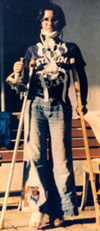
Before age 50, I had a pretty good life. I loved my job teaching high school. I had discovered the joy of exercise, which eluded me before age 30. After a near-fatal automobile accident at 34, I turned life’s lemons into lemonade by morphing the fitness habit that had saved my life into new careers: writing magazine articles about health and fitness and teaching aerobic dance. By age 47, I had written a book.
I wasn’t so lucky in love. I had been married and unmarried to a very good man, who remains a close friend, then had a 25-year string (string? more like a giant ball of yarn!) of involvements – long-term, short-term, and casual. All warm and joyful, but not the love I sought.
At menopause, overheated and haggard from sleep deprivation, I switched from teaching sweaty aerobics at the crack of dawn to contemporary line dancing at dusk. That switch turned out to change my life… more about that in a moment.
Before age 50, I struggled to figure out who I was and wanted to be, and battled my way there. After age 50, that became easy. Rather than needing emotional kung fu to battle my way to authenticity, I could use a softer aikido approach and let what I didn’t want flow away.
After age 50, I understood that joy blossomed through living fully, whether I was single or coupled at the moment – learning new things, teaching (now in health clubs, dance halls and speaking engagements instead of high schools), keeping my own body fit and strong, interacting honestly and helpfully with others, and writing professionally. I wrote six more books after age 50!
I still hoped I’d find that special man to love, but I wasn’t putting my life on hold waiting. I realized I had to be the person I was looking for.

 After five years of loving each other, Robert and I married. We knew he had cancer. We didn’t know we’d have only two more years together. I learned after 50 that we must treasure our loved ones while we have them, because at our age, we will lose them, or they will lose us. We must love fully and joyfully while we can.
I also learned how fragile we are, even when we do everything possible to keep our bodies and minds strong. On June 20, I tripped, slammed to the floor, and shattered my shoulder in ten places. My new book, Naked at Our Age: Talking Out Loud about Senior Sex, was due to Seal Press five weeks later. I had put the book on hold for a year after losing Robert, when grief was my day job. Then I had spent the next year writing it. Darned if I would blow off my deadline for a broken shoulder! I finished the book – on time! – typing with my arm in a sling, measuring out pain killers so that I could focus.
Resilience: that’s the major lesson I learned after 50 and continue to learn at age 66. Life continues to amaze me. What delights are next?
Note from Joan Price: I’m trying to blog my way to the AARP Orlando@50 conference. This blog post is an entry in their competition to find the official blogger to travel to and cover the event. Find out more about the conference here.
“I’m Going to Make You Coffee….”

If you ask me if I still miss Robert, two years after his death, I answer, “Only when I breathe in or out.”
I still start each morning recapturing a memory. Today it was the way he opened his ocean-blue eyes in the morning and smiled, his face melting with love. “Let’s snuggle,” he would say. Then one of us would decide, “I’ll snuggle you,” and we would shift to our sides, the snuggler wrapped around the back of the snuglee.
I loved when Robert snuggled me, enveloping me, so close that we couldn’t tell where he ended and I began, if indeed there was a distinction. I would take his hand in both of mine, push my nose into his palm, and inhale deeply. His palm smelled of sleep, a warm, enticing smell that was totally Robert. I can still smell his hand, still taste his skin as I kissed him everywhere my mouth would reach.
 Other mornings he woke ready to meet the day, his garden or art studio beckoning, no time for snuggling. He announced, “I’m going to make you coffee,” and I always responded, “I love it when you make me coffee.” He padded out to the kitchen to grind beans, boil water, and arrange the filter cone over a metal coffee pot that had journeyed with him for decades.
The “make you coffee” ritual started early in our seven-year love affair, and persisted wherever we were, home or hotel, and whatever else was happening in our lives. Towards the end, when his body started succumbing to cancer, he told me, “As long as I can make you coffee in the morning, I know I’ll be all right.”
Then one morning, he tried to get up, and he couldn’t. He stumbled, his legs trembling, his back stabbing with pain, his brain unable to emerge from sleep. He sat back on the bed. “I can’t do it,” he told me, and we both cried, as I’m crying now, remembering the day that everything changed.
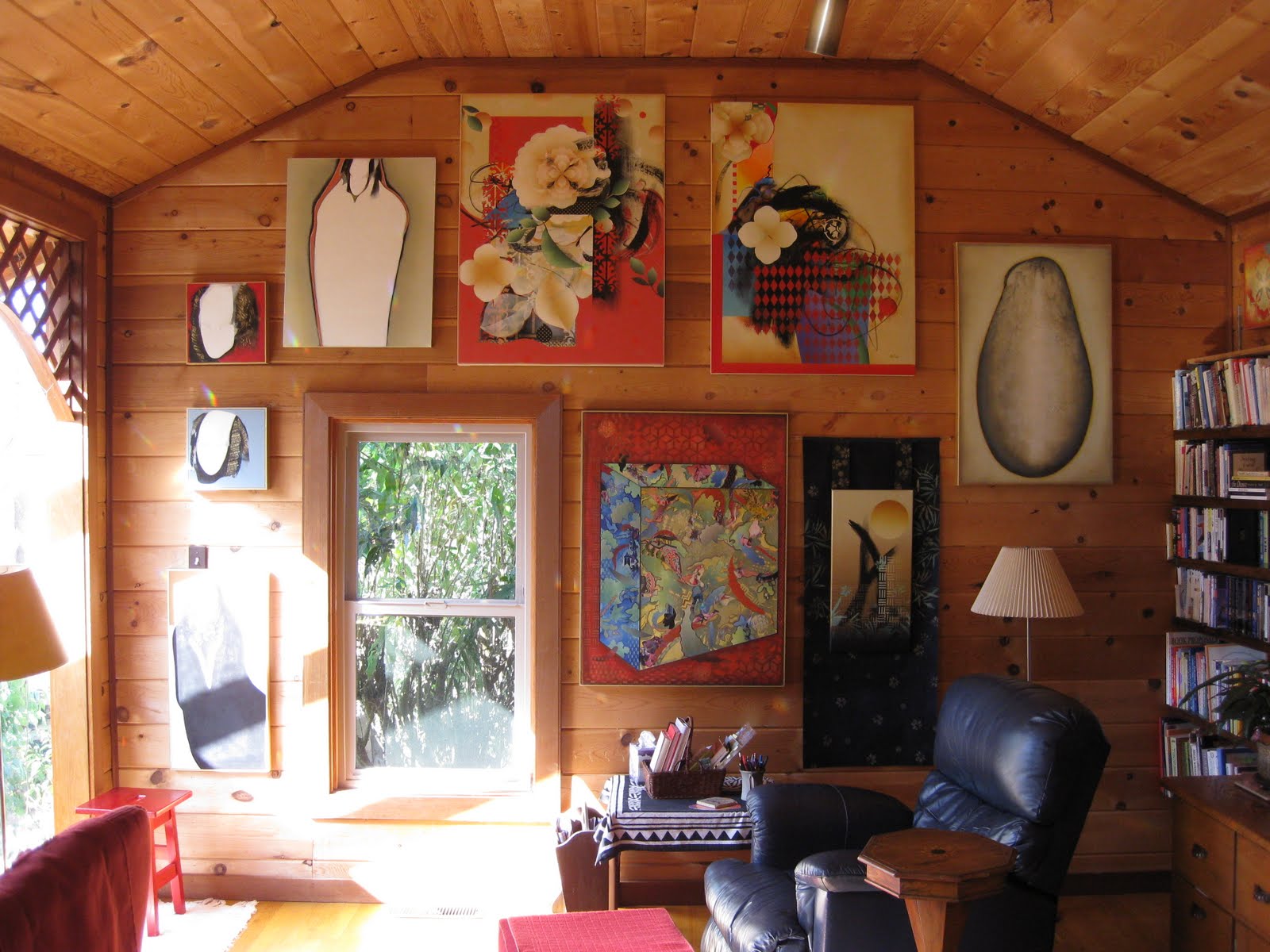
…Now I make my own coffee in his special coffee pot and carry it to the living room where I’m surrounded by Robert’s paintings. I write memories in my journal—snippets of sweet conversation, playful games we invented, afternoons that turned into evening as we made love as if life depended on it. Maybe it did.
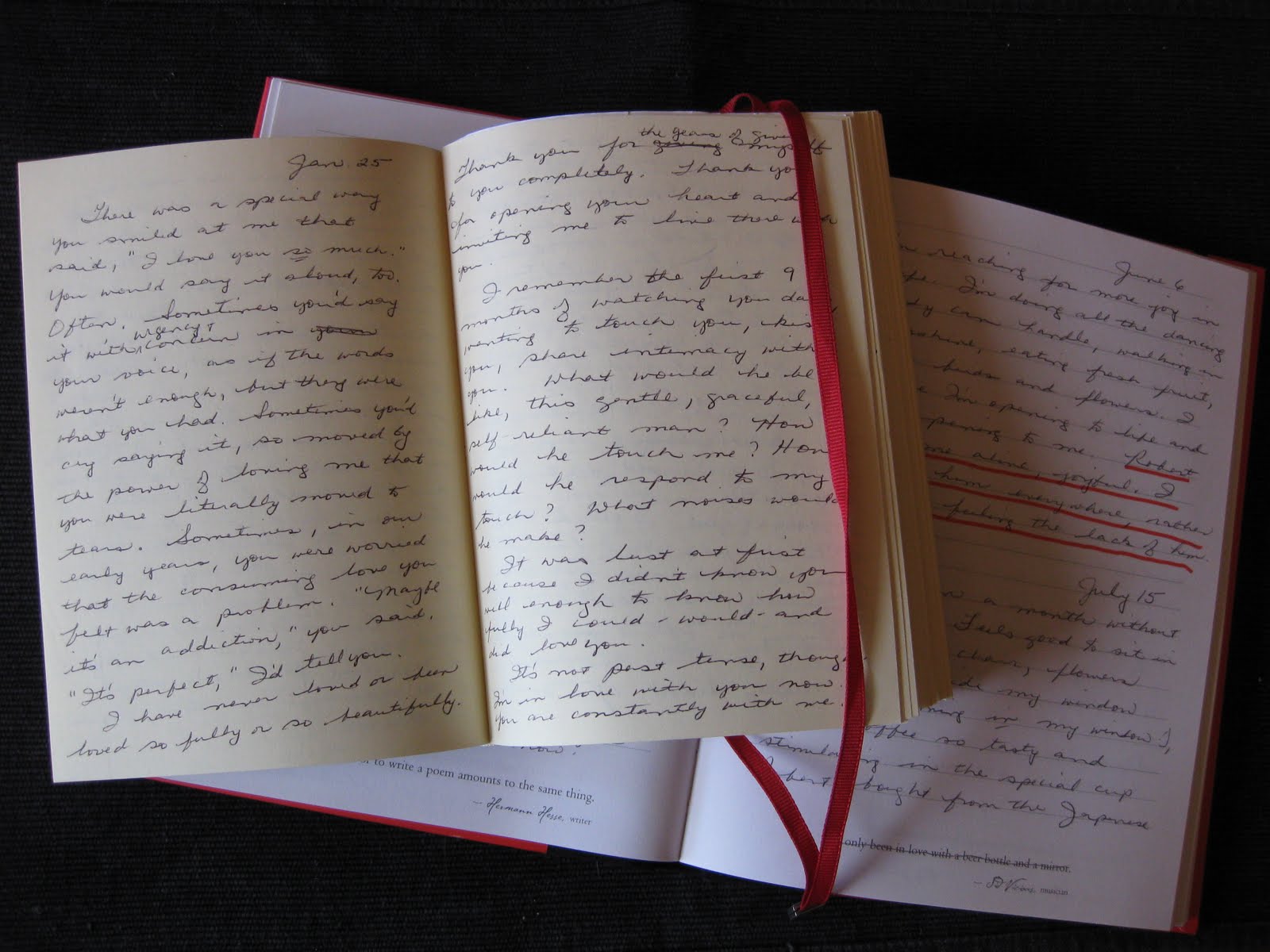 Even though I write for a living, using a computer and all the tech tools available to me, I write my memory journal in longhand. Somehow writing longhand comes from the heart more than the brain, and I rediscover memories I had forgotten.
  My hand lingers over the page, and I picture Robert’s hand –the artist’s hand making love to the canvas, the gardener’s hand making love to the dirt, the dancer’s hand making love to the music, and my lover’s hand–making love to me.
 What does matter, at this point in my life, is that I’m taking with me the best of what Robert and I shared. That’s what he’d want for me, and what I want for myself. I find joy in my writing, in dance, in close friends, in physical and mental exercise, in learning, and yes, in my memories of Robert.
I hold my coffee cup to my cheek. It’s just the right temperature.